
A fly trap can make a big difference if you have problems with flies around your house, garden, or patio. But the location where you hang or place the fly trap significantly determines how well it works. If you hang the trap too close to your seating area, you will attract flies exactly where you don't want them. If you place the trap in an unfavorable location, the flies will be less likely to detect the attractant. Here's where to best place a fly trap and which locations you should avoid.
Why the location of a fly trap is so important
A fly trap attracts flies with an attractant. This scent spreads in the air and leads the flies to the trap. The goal is not to repel flies but to lure them to a specific location. That's why proper placement is important. You want to keep flies away from your patio, dining table, garden doors, or playground. Therefore, a fly trap should not hang where you like to spend time, but at some distance from it. The rule of thumb is simple: place the fly trap where flies are already common and where they will cause as little disturbance as possible.
Where is the best place to hang a fly trap?
The best place for a fly trap is usually at the edge of the garden, at some distance from the patio or your seating area. Think, for example, of a fence, a tree, a pole, a canopy, or a quiet corner in the garden.
Good spots include:
- At the edge of the garden
- On a fence or hedge
- Near trash cans, but not directly next to them
- Near a compost heap
- Near animal enclosures such as stables, pens, or shelters
- In a corner where many flies often buzz around
- At some distance from windows, doors, and seating areas
This way, you attract flies to a place where they are less bothersome.
How far should a fly trap be from the patio?
It's best not to place a fly trap directly next to your garden table, lounge set, or outdoor kitchen. Since the trap attracts flies, it can cause additional nuisance precisely where you want to relax or eat. A practical guideline is to place the fly trap at some distance from the patio or seating area. In larger gardens, a spot at the outer edge of the garden is often suitable. In a smaller garden, you can hang the trap in a corner as far as possible from your seating area. The most important thing is that the trap is not hanging between you and the place where the flies are coming from. Otherwise, the flies can still fly past your patio before reaching the trap.
Do not place the fly trap too close to doors and windows
Many people hang a fly trap by the back door or kitchen window because flies often gather there. However, this is usually not a good idea. You will then attract the flies directly to the entrance of your house. If you want to prevent flies from entering the house, place the fly trap further away from doors and windows. Combine this, if necessary, with screens, closed trash cans, and keeping areas where food residues may be clean. This way, you avoid simply moving the problem indoors.
Sunny and sheltered from the wind
Sun and wind also affect the effectiveness of a fly trap. In a too windy location, the scent of the attractant can dissipate too quickly. This makes it harder for flies to find their way to the trap. A slightly sheltered location often works better. Think, for example, of a corner on a fence, under a tree, or under an awning, as long as the trap is not directly above your seating area. In addition, warmth is often attractive to flies. A somewhat sunny spot can therefore work well, but avoid hanging the trap in an extremely hot or completely enclosed place where the attractant cannot spread as effectively.
Where should you not place a fly trap?
There are a few places where you should better not hang a fly trap:
- Directly next to the dining table: You attract flies to the place where you eat.
- Next to the back door: The likelihood of flies entering the house increases.
- Next to open windows: Here, too, you attract flies towards your house.
- In the middle of the patio: This increases the nuisance precisely where you want peace and quiet.
- Too far away from the source of the nuisance: If flies are mainly found near waste, compost, or animal shelters, place the trap strategically in that direction.
Fly trap near trash cans or compost
Trash cans and compost heaps often attract flies. Therefore, it can be useful to place a fly trap nearby. Do not hang or place the trap directly on the trash can, but at some distance nearby. Also, make sure that the trash cans remain tightly closed and are cleaned regularly. A fly trap works better if you also curb the cause of the nuisance.
One or more fly traps?
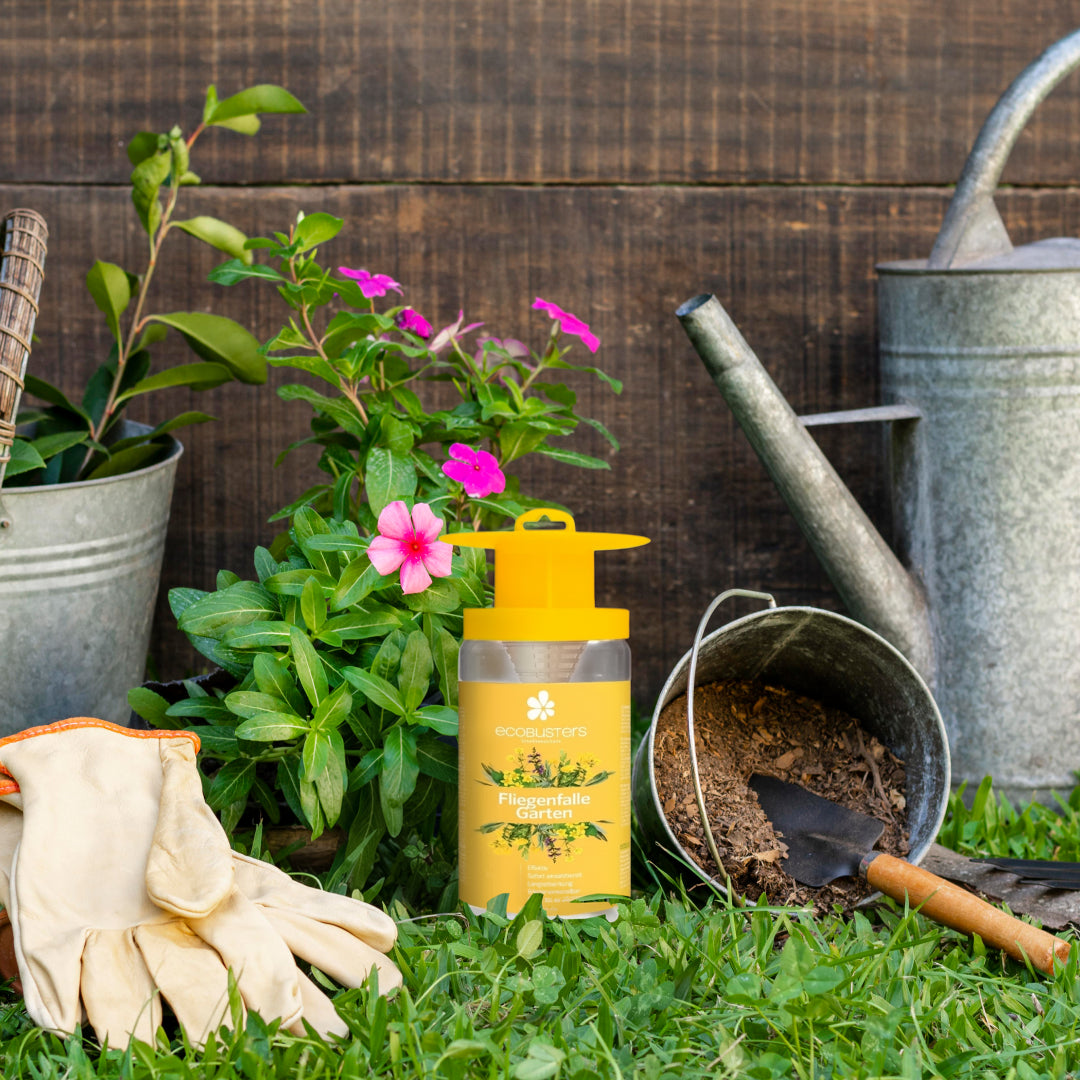
In a small garden, a single fly trap, such as the specially developed garden fly trap, is often sufficient, provided you place it in the right spot. In a larger garden, with dense vegetation, animal enclosures, or multiple sources of flies, several fly traps may be useful. In this case, it is better to use several traps and hang them in strategic locations. This way, you can specifically redirect flies away from the areas where you want to sit, eat, or relax.
When should you hang the fly trap?
Don't wait until there are already many flies. A fly trap works best if you hang it early in the season, as soon as temperatures rise and flies become more active. By starting early, you prevent the fly population from growing rapidly. Especially in spring and summer, it is advisable to regularly check the situation and replace or refill the trap in time if necessary.
The right location makes all the difference
The best place for a fly trap is not directly next to your chair, table, or back door, but at some distance from the places where you want to sit, eat, or relax. Choose a spot at the edge of the garden, near a fence, compost heap, trash can, or animal enclosure. This way, you attract flies away from your patio and increase the chance that the fly trap will work effectively. Do you want to reduce the fly nuisance in your garden or on your patio? Then check out the fly traps and natural solutions from Ecobusters and choose the solution that suits your outdoor area.